
Netpower / References / Quality system for Norwegian farmers
KSL
Quality system for Norwegian farmers
KSL is the farmer’s own tool for self-audits and quality assurance. Netpower runs, maintains and develops the system for the Norwegian Food Foundation.
Netpower has delivered:
Simpler audits and quality assurance for Norwegian farmers
The Norwegian Food Foundation (Stiftelsen Norsk Mat) is an independent foundation that works for greater diversity, quality and value creation in Norwegian food production. Among other things, it is responsible for the Quality System in Agriculture (KSL), the farmer’s own tool for self-audits and quality assurance. In 2022, Netpower took over responsibility for running, maintaining and developing the KSL system.
This project is part of a larger delivery for Stiftelsen Norsk Mat, which also includes the Nyt Norge application portal, Lokalmat and the Spesialitet portal.
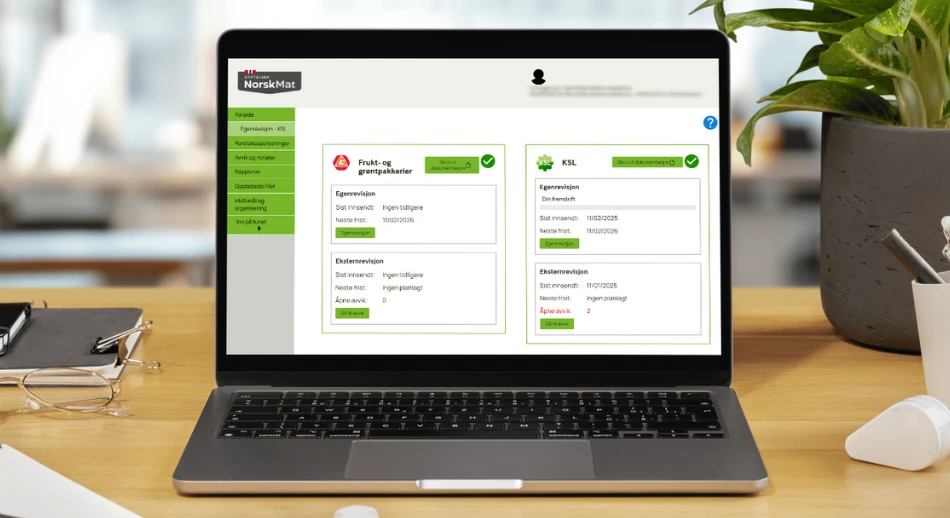
Every year, farmers across Norway carry out audits to document that their operations comply with current laws, regulations and industry requirements. This happens through the KSL scheme, where both self-audits and external audits are part of the quality work on the farm.
The audit database is a key tool in this process. It has been further developed to make it easier and clearer to follow up audits, whether it is the farmer carrying out a self-audit or an external auditor visiting the farm.
To have valid KSL status (Gyldig KSL), a farm must carry out an annual self-audit, close any non-conformities by the deadlines, make arrangements for external audits and follow up requirements from the Animal Welfare Programme. This is a requirement for all producers who supply raw materials to buyers.
– Valid KSL status is important documentation that the farmer operates in line with regulations and industry requirements. It builds trust in the market and is a precondition for supplying goods to many buyers. For the farmer, it is about quality, reputation and access to the market, says Gøril Silden Brekkhus, project manager at Netpower.
Solid groundwork makes room for further development
After Netpower took over responsibility for the solution, a thorough analysis was carried out of the technical platform and the state of the system. This formed the basis for several important improvements that have made the system both more stable and more user-friendly.
Old components and outdated code were cleaned up, resulting in a considerably faster and more robust solution – better equipped to handle high load and further development. The notification system linked to valid KSL status has been further developed, with clearer and more relevant notifications, and support for handling consent to follow-up audits.
The administration interface has also had a proper upgrade. Better filtering, search, sorting and export options now make it easier for administrators to gain insight and follow up users.
Several important integrations have also been completed. Dedicated APIs for buyers have been updated, and the system is now more closely connected to external solutions such as the Animal Welfare Programme (DVP).
How the system will be developed further
The Norwegian Food Foundation and Netpower work closely together and have a clear ambition to develop KSL into an even more user-friendly and future-proof system. Plans include more automation, more integrations and new features that give farmers even greater value in their everyday work.
– An important focus going forward is the combination of service design and technical development. Our UX designers look at the whole service journey, from the first encounter with the system to follow-up and support. That way we can keep improving the solution, based on user testing, feedback and close dialogue with the users, says Brekkhus.
Users in the driving seat
Users have been a central part of the development process. Through interviews, observation and user testing in the field, the team gets valuable input directly from both producers and auditors who use the audit database in practice. This has given good insight into both frustrations and needs – and not least, what actually adds value in a busy working day.
– We have run several rounds of user testing, both online and out on the farms. It has been incredibly useful for understanding how the system works in a real working situation. When we see how users actually navigate, tap and interpret information, we get completely different perspectives than we do in the meeting room, says UX designer Farnaz Shahriari.
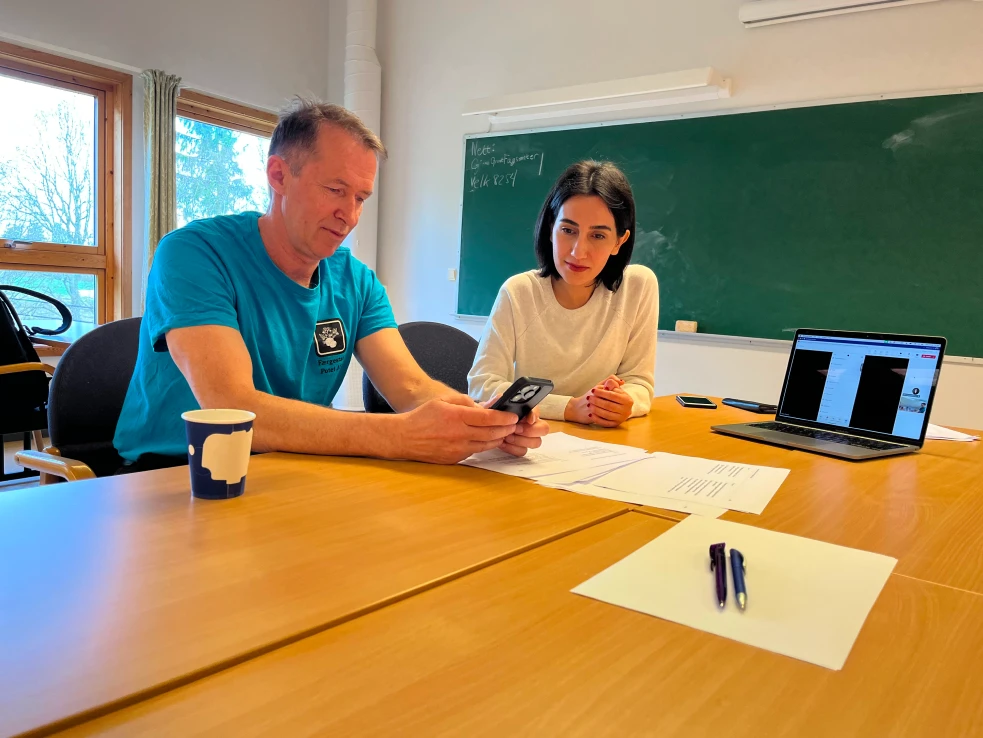
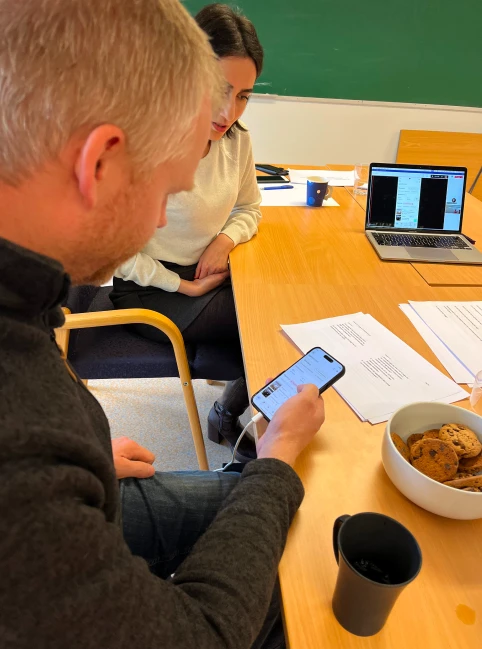
UX designer Farnaz Shahriari testing a prototype with users.
Before each round of user testing, a lot of work goes into discussing new functionality, reviewing sketches and defining what to test.
– We have many good and constructive discussions with the project group. Together we assess different solutions, discuss what we think will work best and set up realistic test scenarios. This gives us shared ownership of the development and ensures that we test what really matters to the end users, says Shahriari.
Working this way ensures that the tests address real needs and challenges, while building support and understanding for why certain design choices are made.
Small changes, big effect
An important lesson has been how much difference small adjustments can make. Changes in wording, button placement or simpler forms have given a noticeably better user experience and reduced the need for support and training.
Going forward, the cross-disciplinary team will keep working iteratively, with short cycles and frequent feedback from users. The close link between service design and technology makes it possible to test ideas quickly and adjust course where needed.
– We believe in building the system together with the users, not for them. It is when we understand their everyday work and challenges that we can develop solutions that really make a difference, Brekkhus concludes.