
Netpower / References / Line-of-business and portal system
Kulturtanken
Line-of-business and portal system
With a new digital platform, Kulturtanken has made Den kulturelle skolesekken (DKS), the Norwegian Cultural Rucksack, easier to administer and more accessible for its users.
Written by Oda Hjelmeland
Netpower has delivered:
Kulturtanken is responsible for DKS
Kulturtanken is the government agency responsible for developing, coordinating and managing arts and culture for children and young people in Norway, and it runs Den kulturelle skolesekken (DKS). The scheme means around 900,000 pupils experience art and culture every year, either at their own school or at a cultural institution. Events cover the six art forms in DKS: literature, film, performing arts, cultural heritage, visual art and music.
Netpower was commissioned to build an entirely new line-of-business and portal system to streamline the administration of DKS. The first version launched. The solution has had regular updates with new functionality and continuous improvements ever since.
A new line-of-business and portal system
The report “Utredning av administrativt system for Den kulturelle skolesekken” (Rambøll, 2015) identified several challenges in the DKS scheme and concluded that an administrative system was needed to support the processes of this nationwide programme. When Netpower was selected as supplier, the focus therefore became building one complete system that could handle everything in one place – from digital applications and planning to reporting and evaluation – for many very different groups of users.
A simpler application process
Artists and performers used to have to apply county by county, with different processes, forms and deadlines. With the new portal, a performer submits a single application that can go to every county and selected municipalities at once. That saves both time and effort, and gives the individual DKS units a richer selection of productions to choose from.
– It has led to a considerable increase in the number of proposals. A nice problem to have for the people planning cultural activities, and a real gain for DKS as a whole, says Gøril Silden Brekkhus, project manager at Netpower.
Tour planning from start to finish
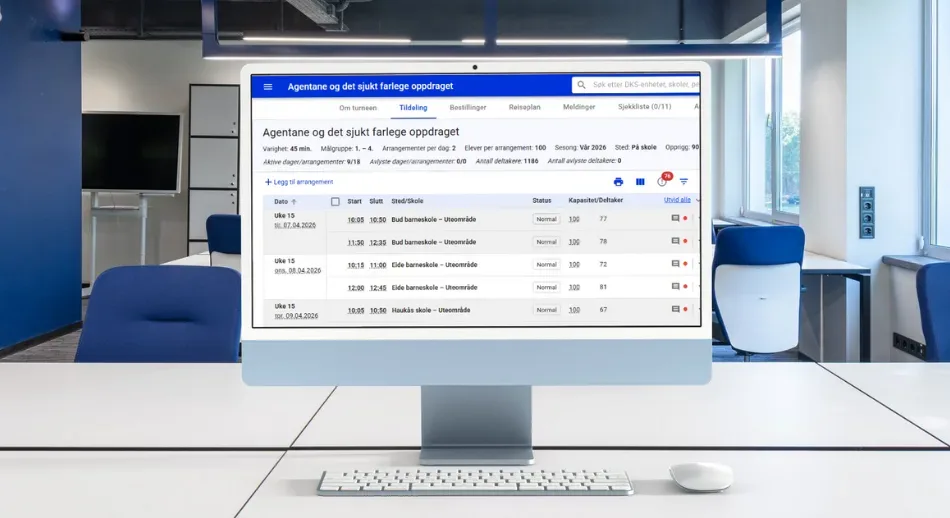
Once all the proposals are in, the DKS units in the counties and municipalities start planning next school year’s events. Through the portal, planners select which proposals go forward into production. Decisions are made and decision letters sent out, and agreements are signed with the performers involved.
The portal gives them a single tool for putting tours together, from allocating classes to logistics and budgets. Planners can see capacity, avoid double bookings, add transport and shape tours around criteria such as location, duration, category and travel time. Alerts help them spot and resolve conflicts, for instance where two classes are allocated to different events at the same time. That gives them better control and a clearer overview, while making tours easier to coordinate across municipalities and counties. There are also wizards and simplified forms for planners who only set up a handful of tours a year, so the system suits both daily users and occasional ones.
Culture contacts, teachers and school administrators can log in easily with Feide to see what their school has been offered. There they can see which productions the school has been allocated and sign up for bookable events.
Performers, who now have a much simpler way to submit proposals, can follow the status of those proposals in the performer portal. It also gives them an overview of the tours they have been allocated, which they can approve before they begin. All the information they need about a tour is available there, and performers can talk directly to the planners for each individual tour. All of this is available in the performer portal on the web, and in a dedicated app.
For teachers and school administrators, planning has become far clearer, from easy log-in through Feide to quick access to the relevant information about productions, sign-ups and the practical details of a school visit.
Alongside the portal, dedicated WordPress sites have been built for DKS, consisting of a main site and several sub-sites for the different units. These sites follow a shared design template and are seamlessly integrated with the portal, both visually and technically, so users experience one coherent solution across content and functionality.
– The portal supports the entire workflow, from a performer’s proposal through to a finished tour, and creates a shared platform that makes collaboration between performers, planners and schools both simpler and more efficient, Brekkhus explains.
Clear reporting and statistics
The portal gives an annual overview of activity in each DKS unit, reporting on the number of tours, events, participants and any cancellations. For units that do not use the portal for tour planning, there is a simple way to record activity manually. Together with a dedicated reporting form, this forms the basis of the combined annual report, which in turn feeds the reporting to the Norwegian Ministry of Culture.
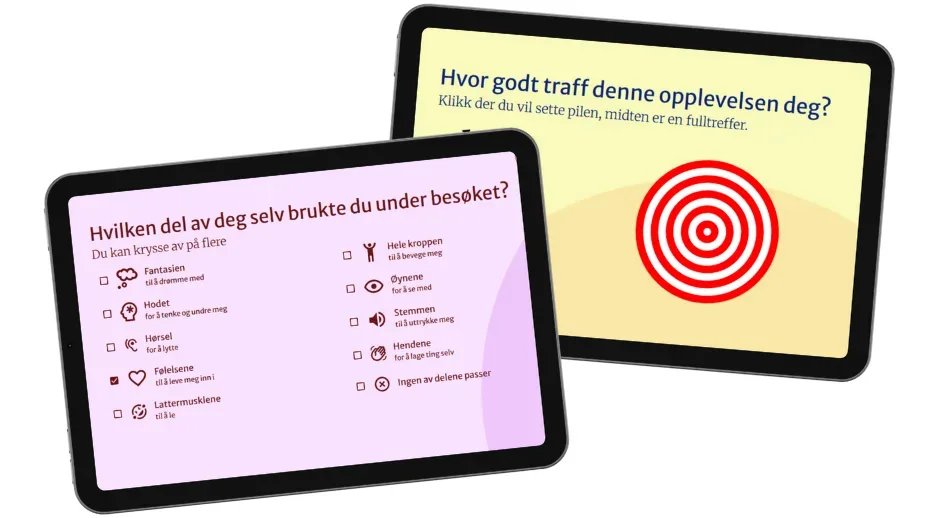
Pupil feedback is collected through a digital tool designed to be both accessible and engaging. For pupils it means reflecting on the experience they have taken part in, while teachers, culture contacts and performers give feedback from their own perspectives. Together this provides valuable insight into how a tour was received and experienced – an important basis for improving the quality of Den kulturelle skolesekken and developing it further.
Seamless integrations
The new line-of-business and portal system is built to work well alongside other solutions. Important integrations include:
- Feide: simple, secure log-in for teachers and schools.
- TONO: automatic reporting of music use and rights clearance.
- Open API: enables data exchange and third-party innovation (teaching material, for example).
- Fint: retrieves pupil numbers for classes and subject groups in upper secondary schools.
- Imageshop: a DAM solution for managing images.
- KS Fiks: archiving in the municipality’s own archive system.
The solution is a modern, scalable architecture built on Symfony (PHP) and React, with GraphQL for efficient data flow. The system runs in Google Cloud with Kubernetes and Docker for flexible operation, and uses Elasticsearch for fast search and RabbitMQ for message handling, among other things. The data sits in MySQL. WordPress is used alongside it for publishing content, and an accompanying mobile app has been built for both Android (Kotlin/Java) and iOS (Objective-C), with Firebase supporting notifications and analytics.
Clear results
The system has been a great success and has delivered significant improvements in the form of shared infrastructure for the whole of Den kulturelle skolesekken and for Kulturtanken.
More automation, greater efficiency
Digitising the administrative and reporting processes has made day-to-day work far more efficient. Data is collected automatically, and reporting is simpler and quicker.
Better usability and accessibility
The solution has made it easier for teachers and pupils to find information about cultural productions in their county or municipality. Users can sign up for events easily through the school portal, and the whole system is optimised for mobile, tablet and desktop.
The DKS annual report for 2024 shares the following results:
- 48,337 events were held
- 3,110 schools took part
- 2,365,582 participants in total
On average, each pupil had 2.9 art and culture experiences through DKS.
Karlina Fierro Nordgreen, Senior Adviser at Kulturtanken, says this about the project:
– Over several years, Netpower AS had built up detailed knowledge of the DKS scheme through their earlier projects. That meant we could start developing the DKS portal quickly, which was a great advantage for Kulturtanken and for DKS. We have had a productive collaboration that has helped develop a portal covering several sectors and serving a wide diversity of user groups. We value the close dialogue and the innovative environment that has made it possible to create strong digital solutions for everyone involved.
Continuing to invest
The project does not stop here. Two areas stand out for the time ahead:
– Kulturtanken is constantly looking at how the solution can be developed further. Right now it is AI and case journalling in particular that could take the system another step forward, but this is under continuous review, Brekkhus concludes.
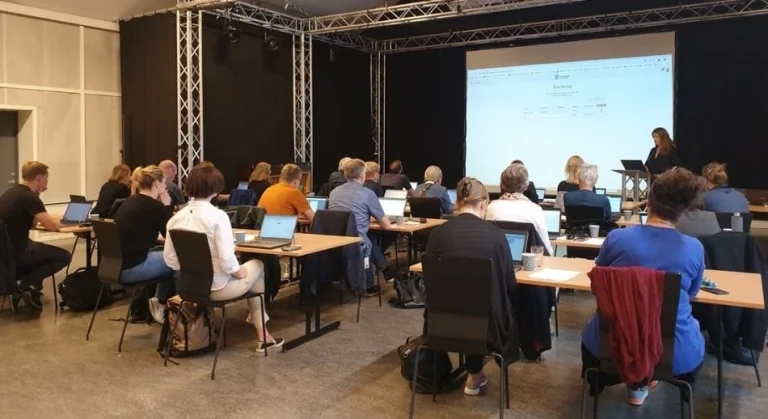
Training for DKS.